Listen to the same hit
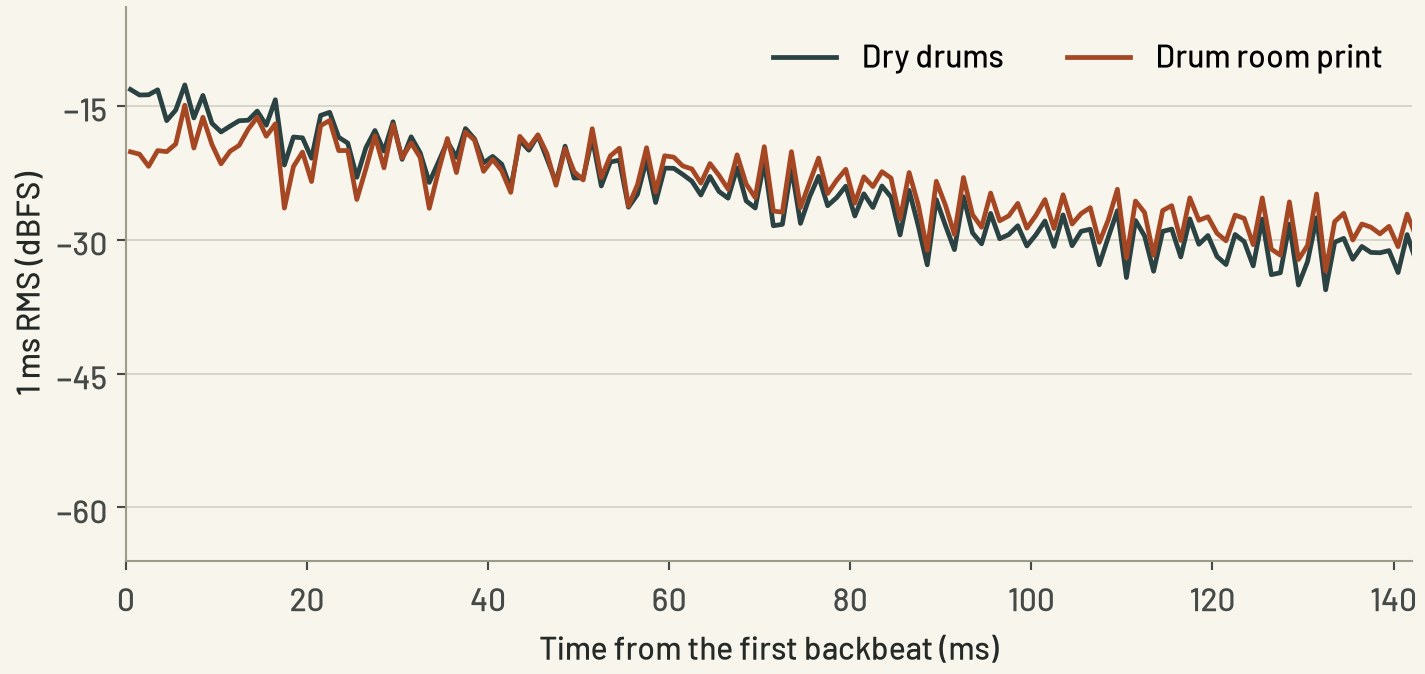
The Pass 58 comparison starts dry. At ten seconds the same four bars return through Drum room print. Leave your monitor level alone. On the printed pass the stick attack sits closer to the drum and the room. The effect is clearest on the backbeats.
What changed on this take
We measured the first 12 milliseconds of each main snare hit and the body from 22 to 95 milliseconds. The median body relative to the median attack rose by 7.7 dB. Energy between 45 and 110 Hz rose by 2.0 dB at matched loudness. These figures describe this performance and preset.
Listen to the kick under the hat
A short, bright peak can use up tape headroom sooner than a low note. A strong bass note can also change how a simultaneous hat is recorded. Put the two on one bus, then try separate instances. A quieter record level will bring the results closer together.