
Desk Two
Recording mixer
The kick changes when the bass comes in. Send them through separate channels and into the same desk bus. Turn up the bus drive, keep both EQ knobs in the middle, and listen to the space between the hits.
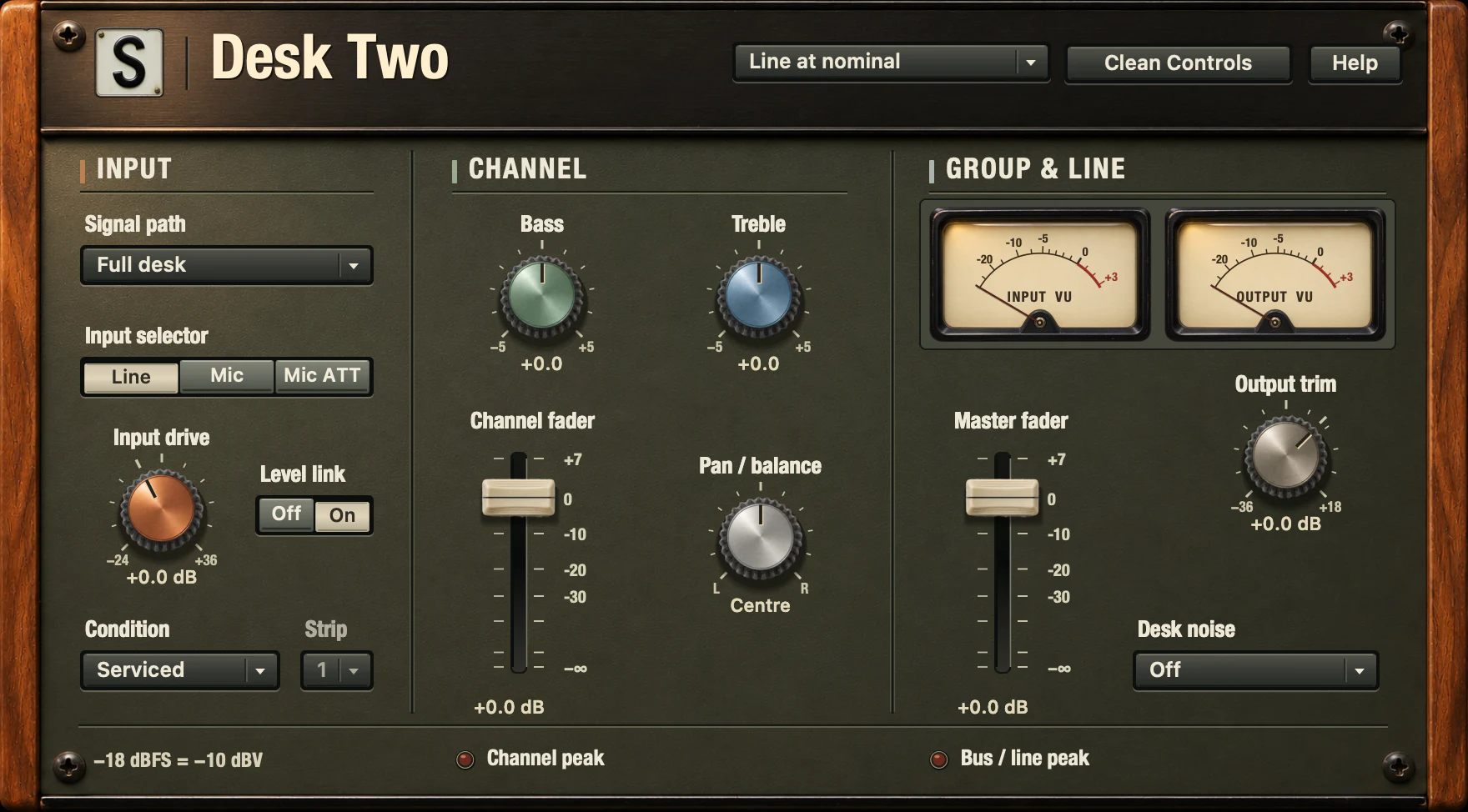
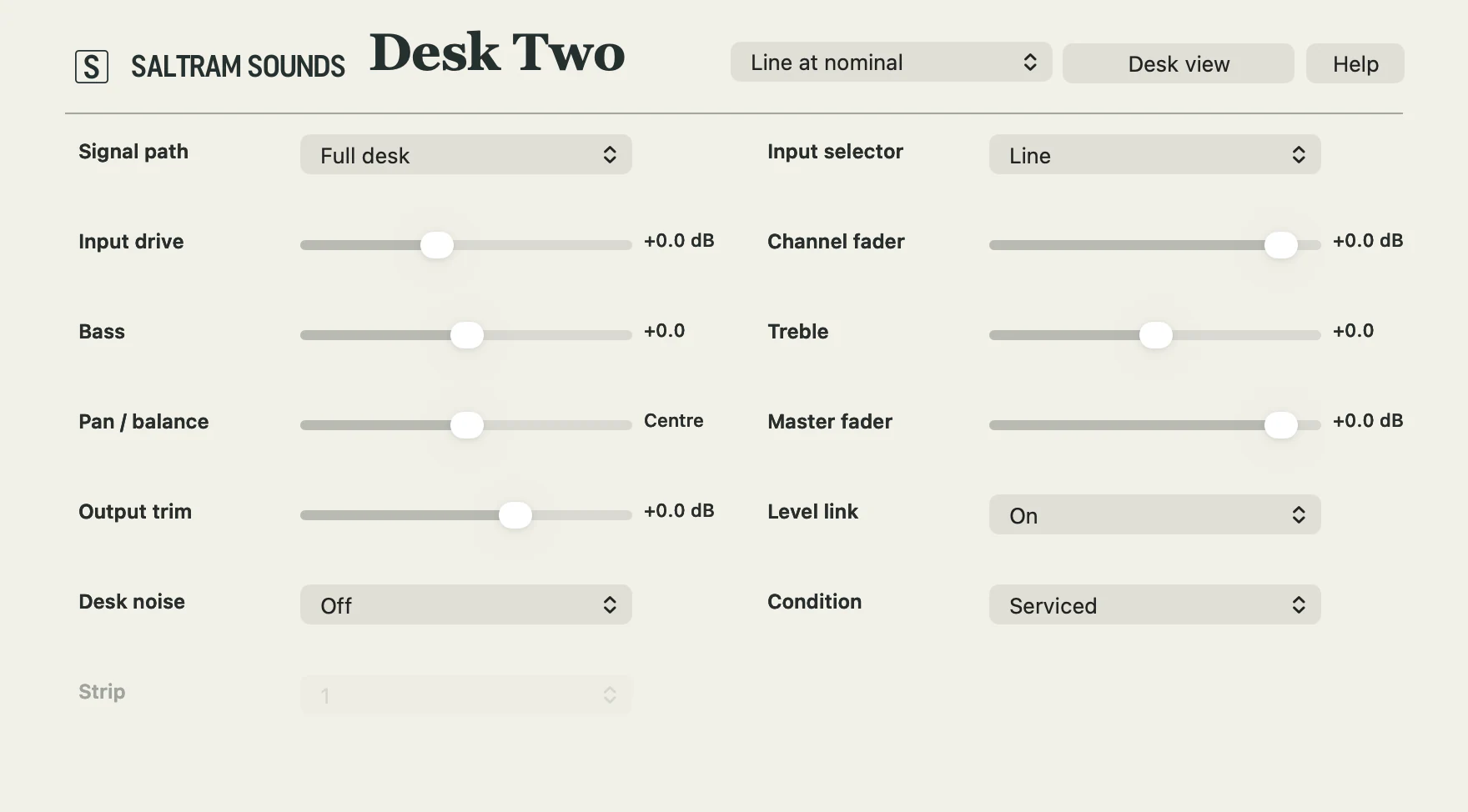
Two faders on a Model 2A
TEAC put six inputs and four recording buses on a small desk. The channel fader feeds its bass and treble circuit. The master fader sits after the amplifier where the channels meet. You could run the channel hot and bring the master back. Reverse those moves and the loud hits come out differently. Desk Two keeps those faders in their original places.
- Channel
- Choose Line, Mic or the 20 dB mic pad. The bass and treble pots share one active circuit. The channel lamp shows when a peak runs out of room.
- Six strips
- Some channels lean towards the bass, others let the pick come through. Choose Serviced, Original parts or Worn, then try strips 3 and 5 with both tone knobs in the middle. Stereo pairs use neighbouring strips.
- Group bus
- Put a Channel insert on each track and send their outputs to one Logic aux. A Group bus insert there processes the combined signal. Full desk gives one track the whole path.
- Cue and access
- Take a cue before the channel fader and EQ, or patch another effect between Access send and Access return. Use the master to set the level going into the final line amplifier.
Drums and bass on one bus
- Open the included Logic Pro 13 session. The drums and mono bass both feed Desk bus. Drums to group and Bass to group are the two channel presets. Both tone controls sit at centre.
- Open Desk Two on the aux and select Driven group. Its Input drive is +15 dB. Lower it towards 0 with Level link on, then bring it back during a strong kick and bass note.
- To try the desk ahead of tape, put Pass 58 after Desk Two on the aux. Keep the tape monitor on Input while you set the desk, then switch to Repro.
What’s modelled
The EQ and signal path follow TEAC’s service drawing. The six strips, component wear, supply response, hiss and stereo leakage are engineering estimates. We have yet to measure an individual Model 2A. Logic handles the bus assignments.
Four bars through the mixing desk
Dry first. At 0:10 the same performance returns through two desk channels and their shared bus. Both Logic prints measure −20.6 LUFS. Listen to the front of the snare while the bass note holds.
- Dry
- Stereo drums and mono bass, all three inserts bypassed
- Processed
- Drums to group, Bass to group and Driven group
The same desk in three conditions
Listen to the bass note under the backbeat. Serviced starts first, Original parts at 7.5 seconds and Worn at 15. The last three bars of each Logic bounce are matched to −20 LUFS. Hiss is off.
- Drums
- Strips 5 and 6
- Bass
- Strip 3
- Bus
- Same +15 dB drive in all three takes
Specifications
- Format & version
- AUv2 · 1.1.5
- Build target
- macOS 13 or later
- Processor
- Apple silicon & Intel
- Channel layouts
- Mono, mono to stereo, stereo