
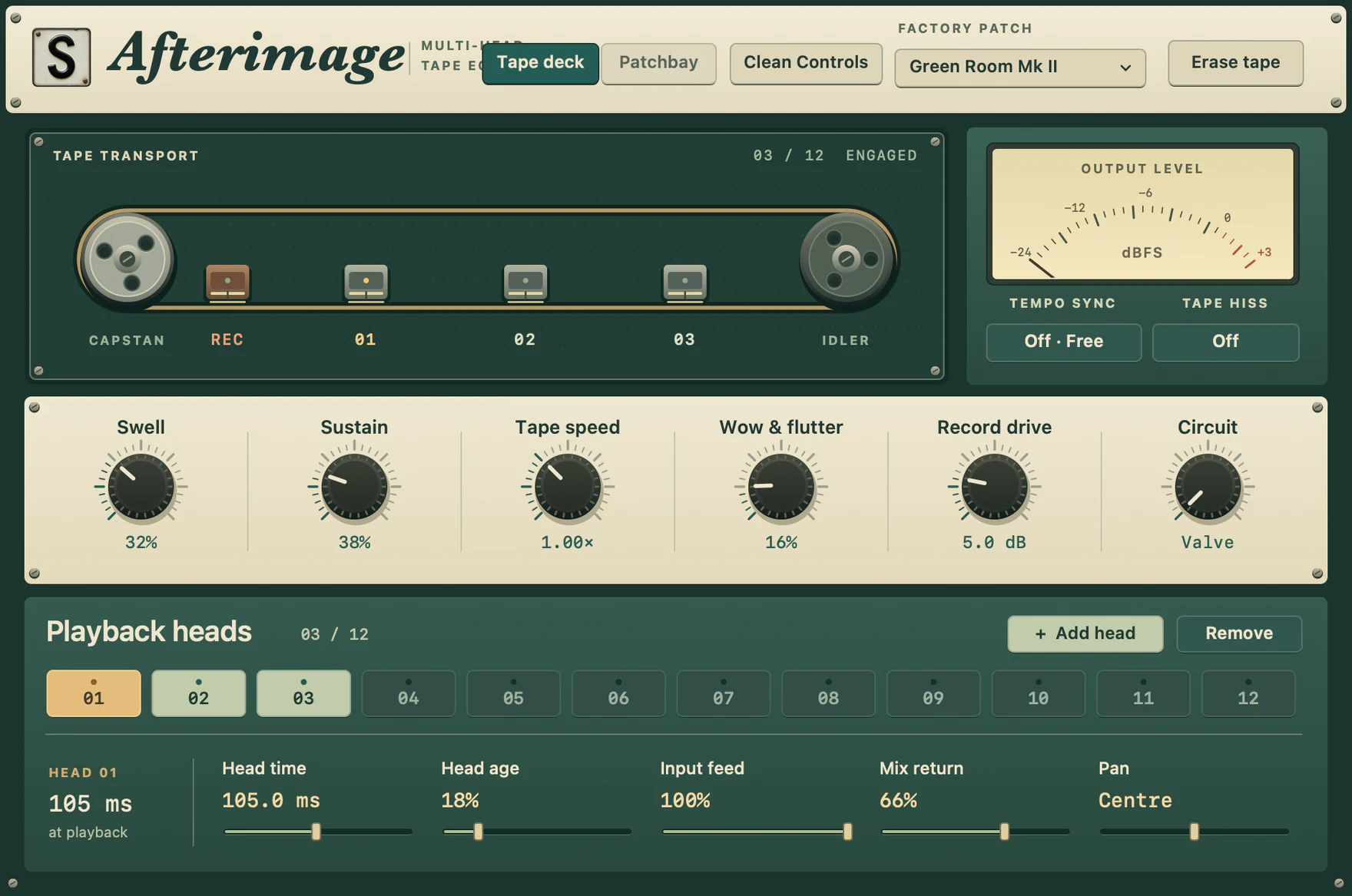
Afterimage
Multi-head tape echo
Patch one tape head into another for repeats that change rhythm and pan as they decay.

Print drums to half-inch tape, build an echo one head at a time, or play through the four effects on John’s rhythm guitar track.
Patch one tape head into another for repeats that change rhythm and pan as they decay.
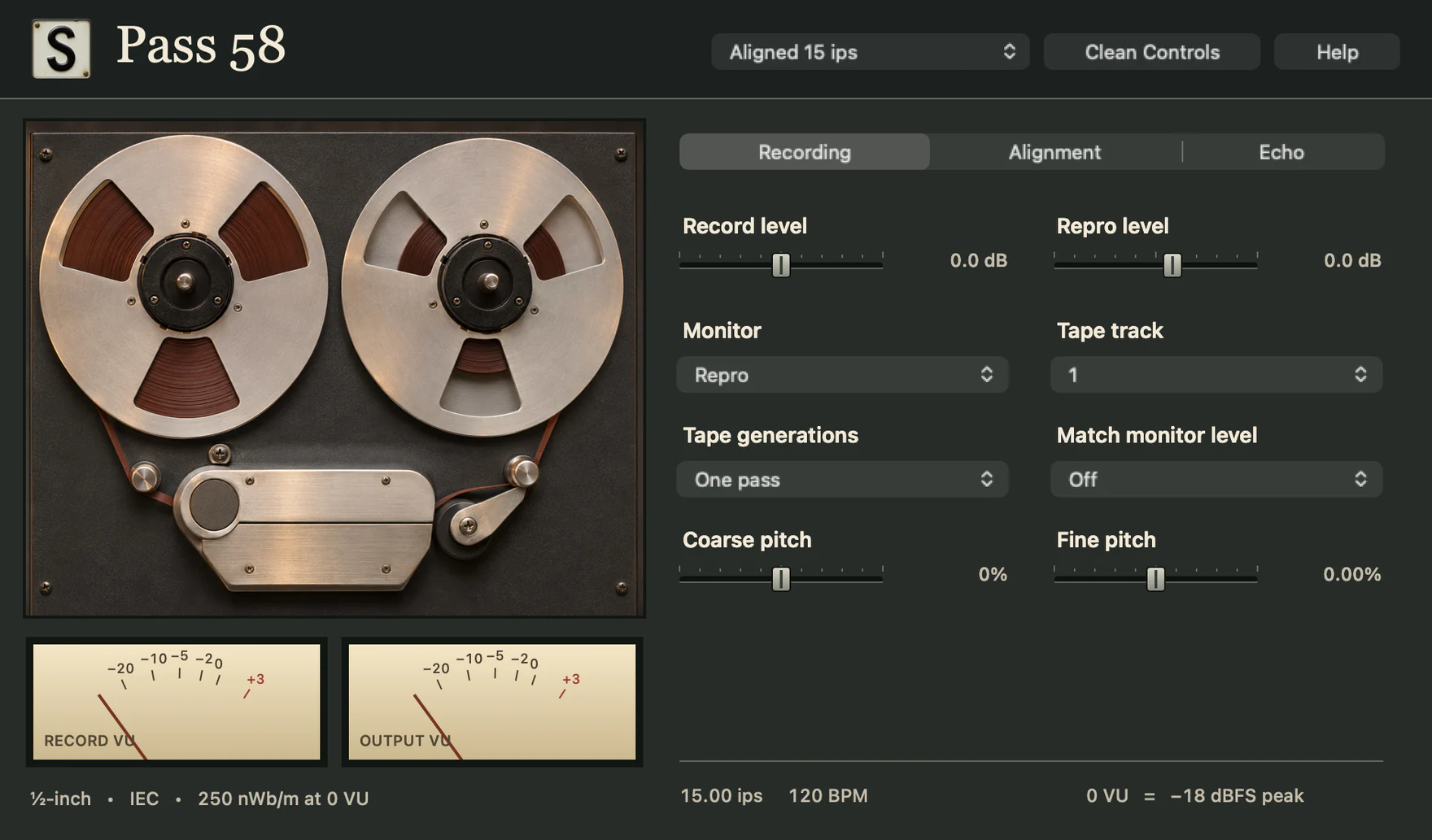
Print a track to a 15 ips eight-track model. Send just the part the tape changed into a separate echo.
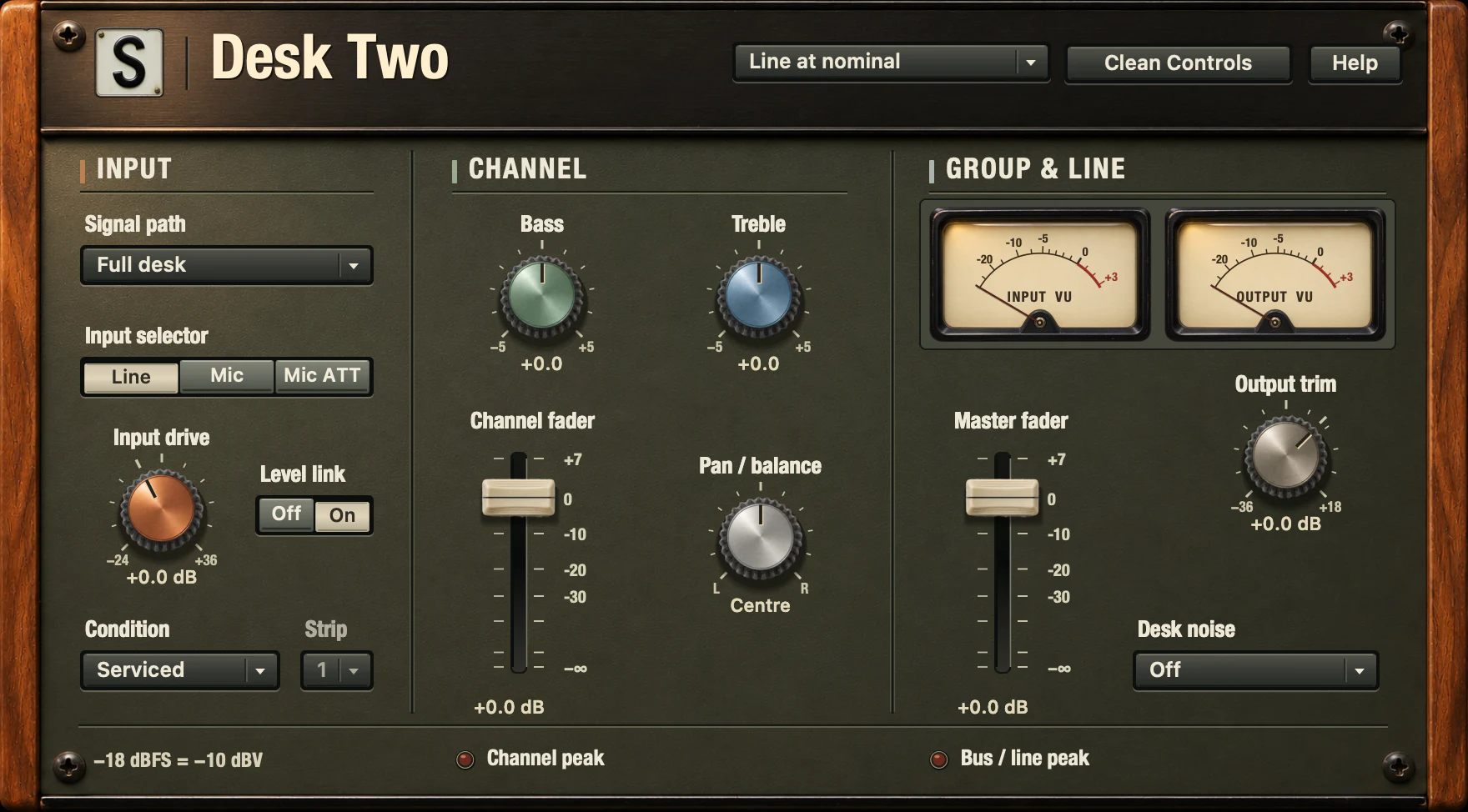
Mix through the channel and bus circuits of a 1978 TEAC Model 2A. Push a single track or drive a whole group together.
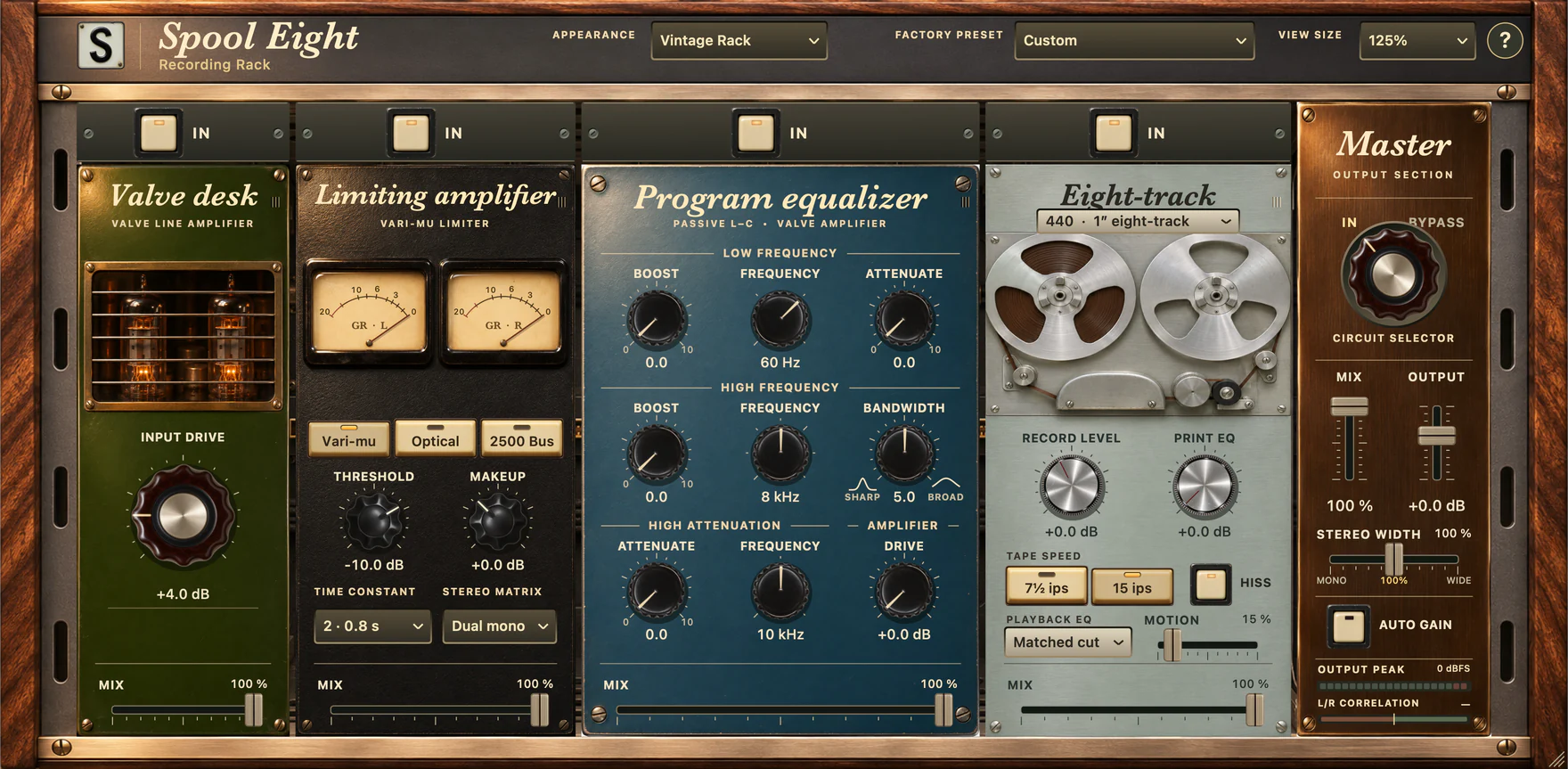
Run a valve desk, compressor and program EQ into tape. All four stages can change places.
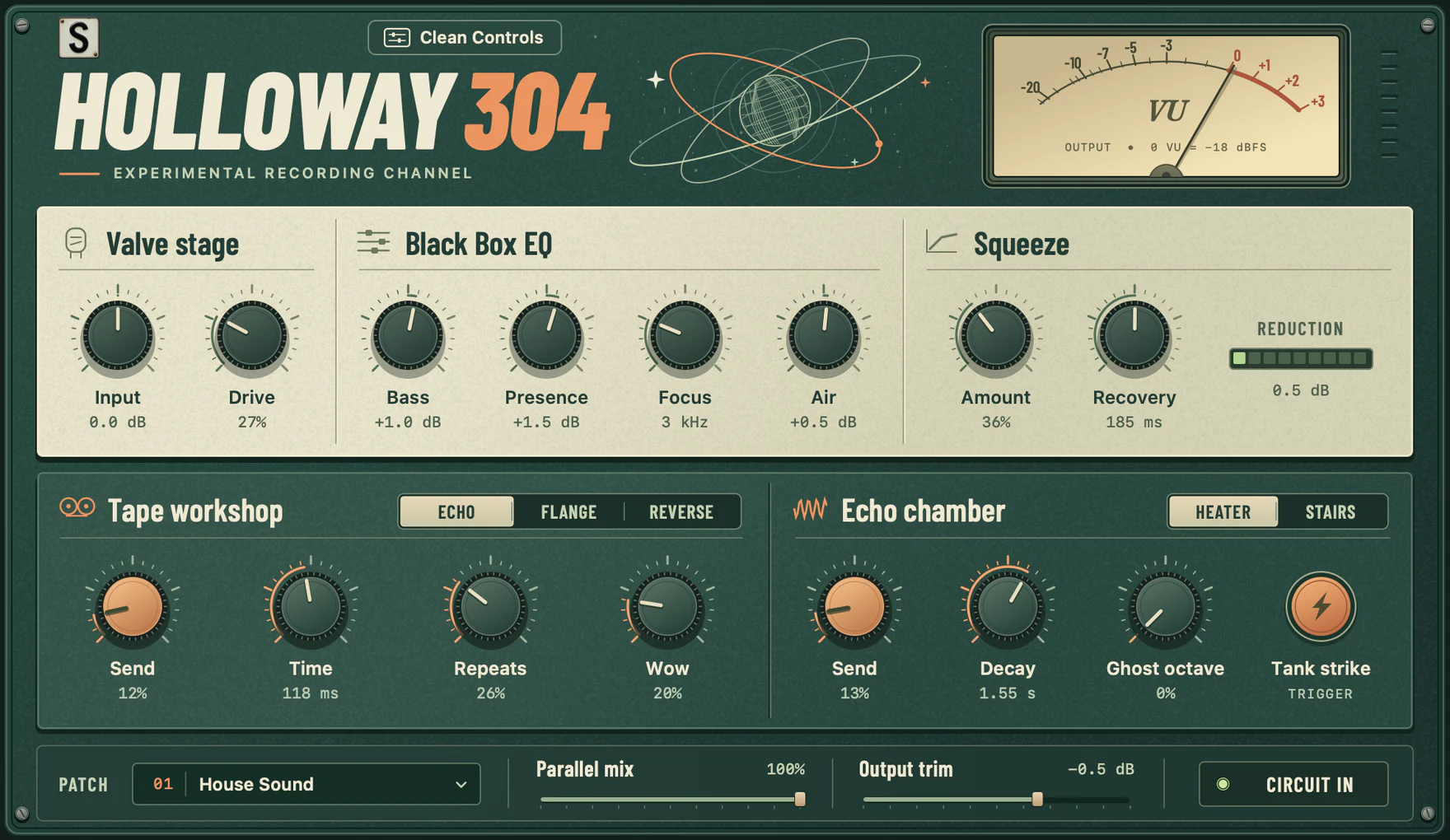
Send a snare or vocal through the valve desk into a spring tank or a stairwell. You can strike the tank between beats.
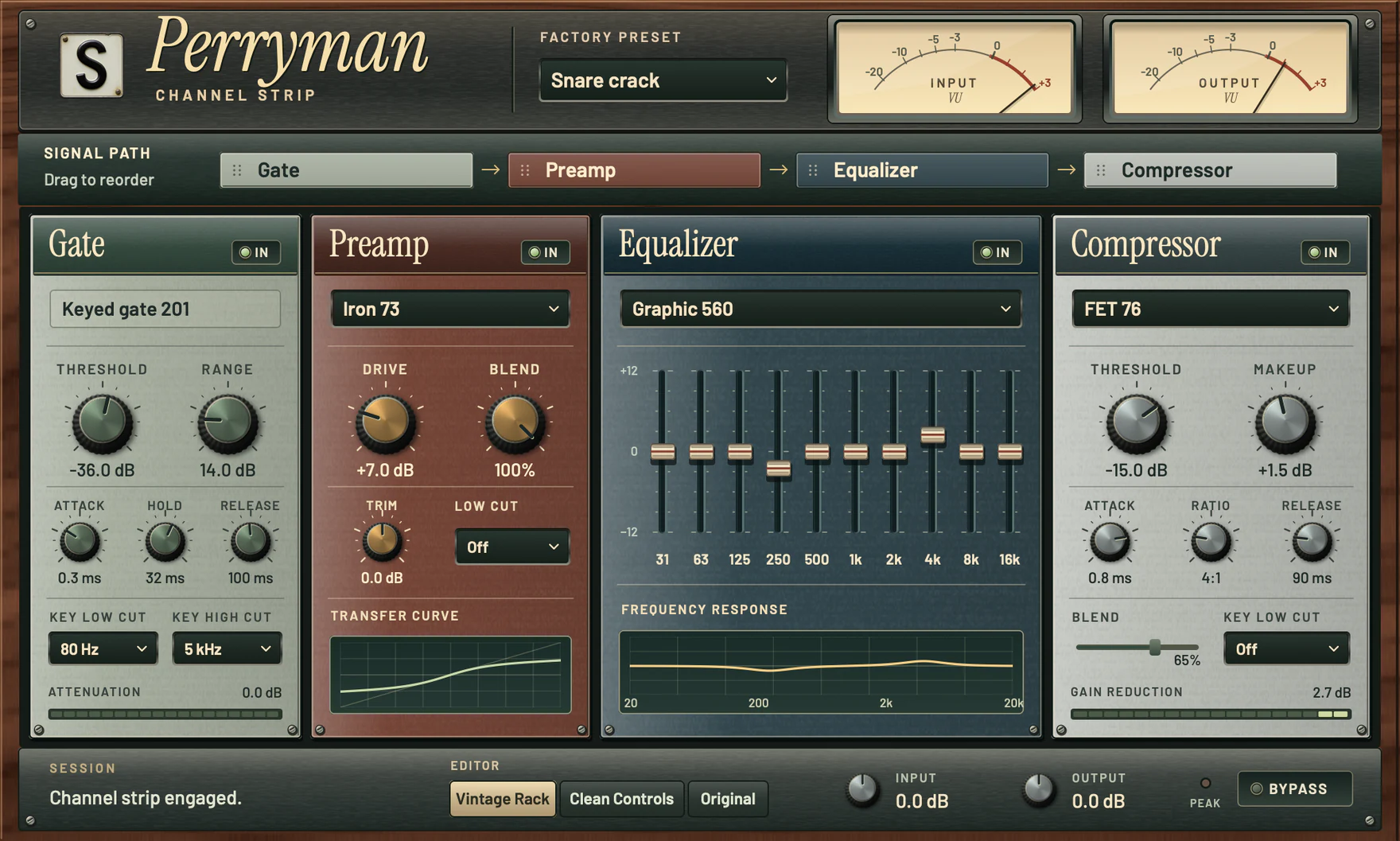
A keyed gate, a choice of four preamps, EQ and compression for drums, bass and guitars.
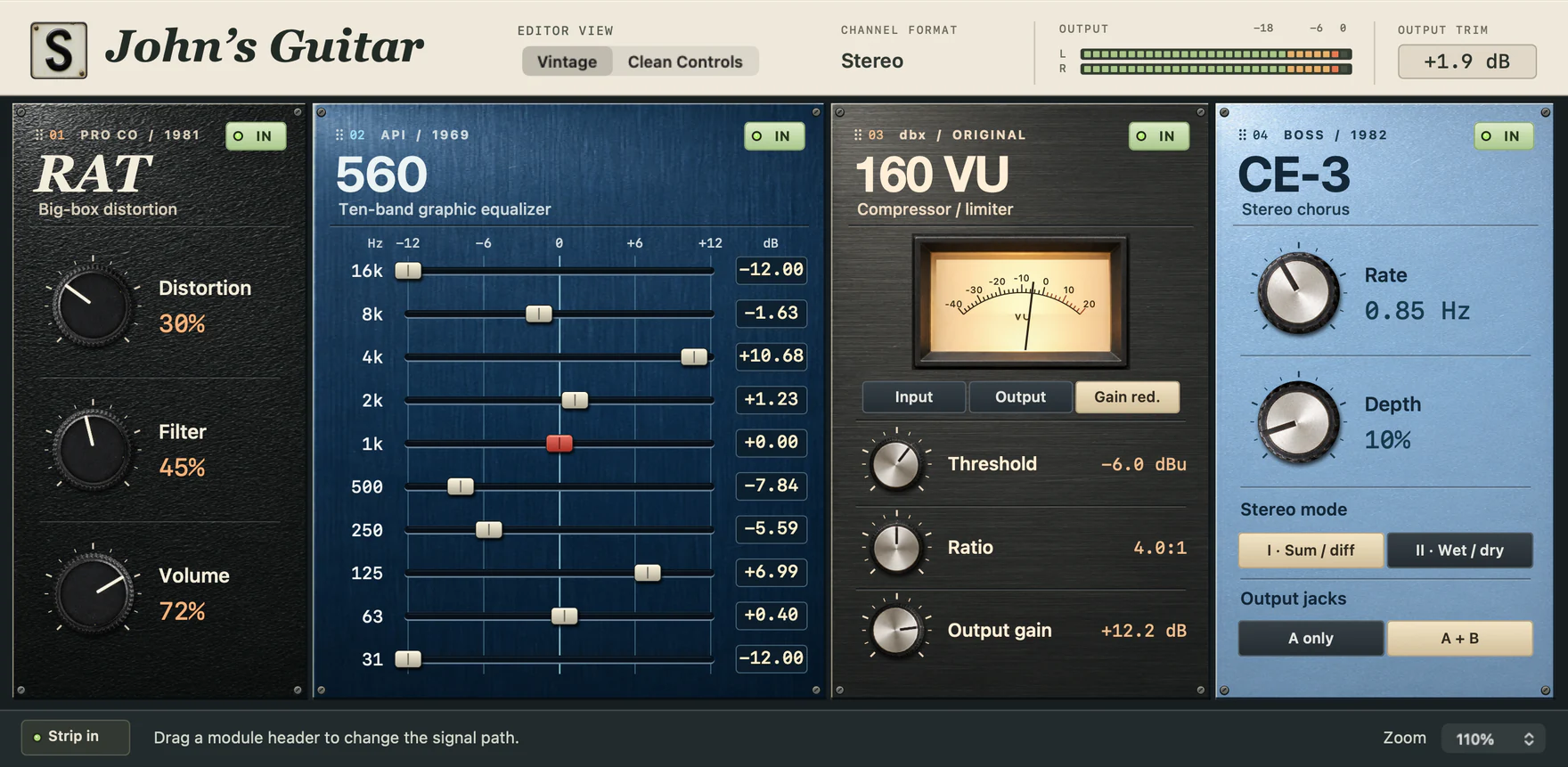
The distortion, ten-band EQ, compressor and stereo chorus from John’s rhythm track, recalled in one insert.
I named Saltram Sounds after the street where I live. John’s Guitar started with four effects on a rhythm track in Logic. I put them in one plug-in with the settings I’d used, right down to the extra 1.9 dB on the output.
The original guitar settings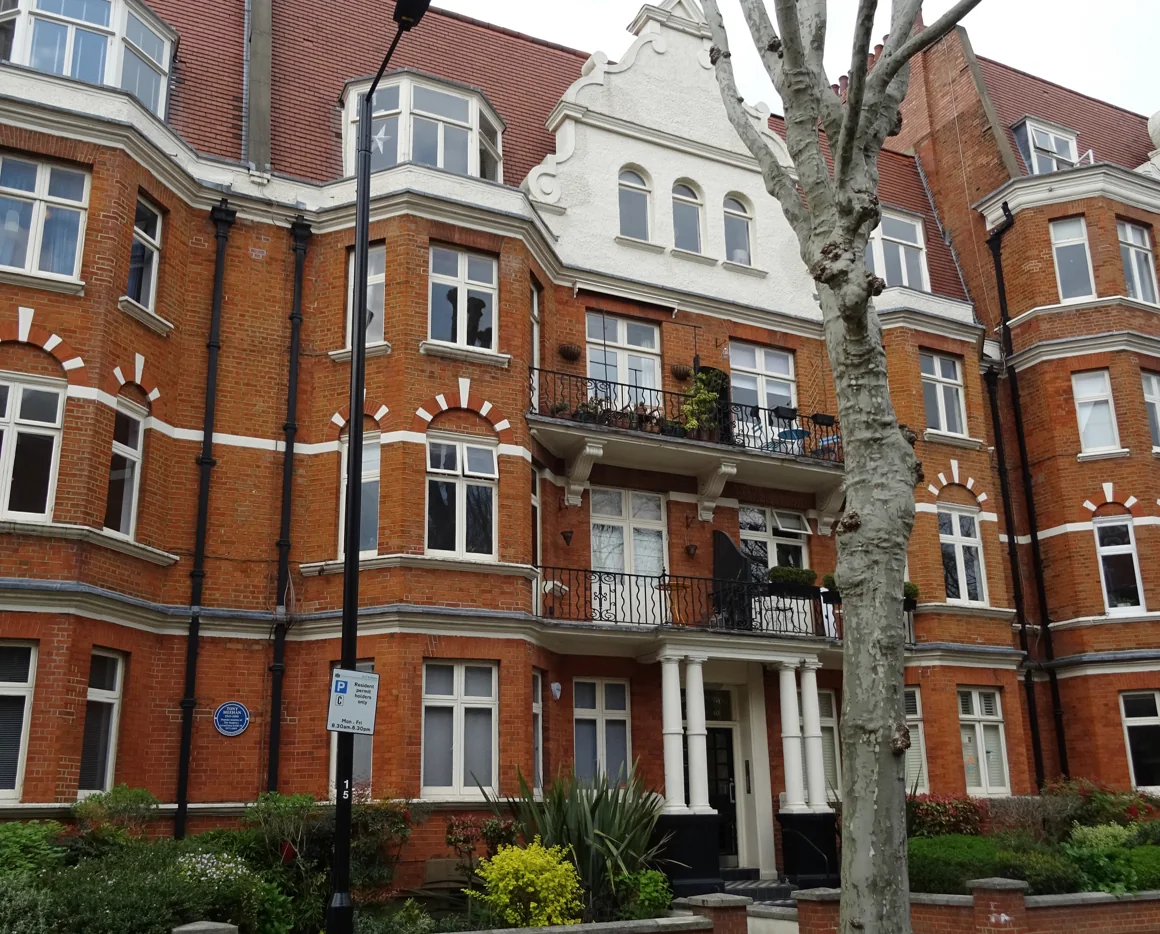
Lauderdale Mansions, cropped and toned, including the print above. Spudgun67 · CC BY-SA 4.0.
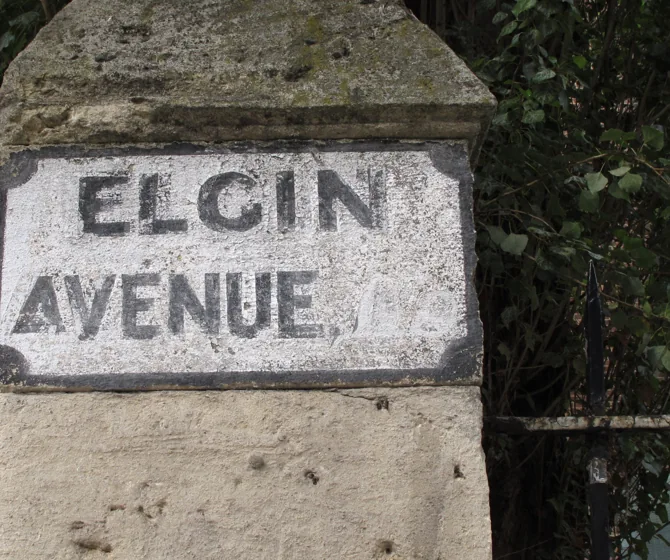
Elgin Avenue gatepost, cropped. trailerfullofpix · CC BY-SA 2.0.
Hear a snare through Pass 58, then hear the same drums with a bass line through Desk Two. Both comparisons are matched for loudness.

